FOLLOW THE EVIDENCE
Glutathione research.
Look at the evidence.
Human glutathione studies have measured blood and cell levels, oxidative-stress markers and immune-cell activity. Their formulations and methods differ. Here are four studies and a practical way to read their results.
Four studies, side by side.
Conventional oral glutathione
40 adults · 4 weeks · placebo-controlled
At 500 mg twice daily, this trial found no significant improvement in the measured glutathione status or oxidative-stress markers. It tested conventional oral supplementation over four weeks.
Source: Allen & Bradley · 2011Longer-term oral supplementation
54 nonsmokers · 6 months · placebo-controlled
With daily doses of 250 or 1,000 mg, researchers found increases in glutathione measurements across several body compartments. This longer trial shows why duration matters when comparing studies.
Source: Richie et al. · 2015A liposomal pilot study
12 adults · 4 weeks · two dose groups
Daily liposomal glutathione at 500 or 1,000 mg was associated with increased glutathione stores and changes in oxidative-stress and immune-function markers. The small pilot was not a placebo-controlled comparison.
Source: Sinha et al. · 2018Liposomal versus plain glutathione
12 adults · single 1 g dose · open-label
Six participants in each group received LipoDuo™ or plain glutathione. The liposomal group reached a substantially higher plasma peak. This was a pharmacokinetic comparison of a specific formulation.
Source: Prasad et al. · 2026A measurement is not a whole outcome.
A blood test can answer whether glutathione levels changed. A plasma concentration curve can help describe delivery over time. An immune-cell assay measures a laboratory activity. Each answers a useful but narrower question than “Will I feel better?”.
When a result is described as a benefit, trace it back to the measured endpoint. A change in a marker does not automatically establish a change in energy, appearance, illness frequency or another everyday outcome. Those outcomes require their own measurements.
Levels
How much glutathione was measured?
Timing
When and for how long was it measured?
Outcome
Was the endpoint a marker or a practical benefit?
Five questions to ask of any study.
First, was it a trial in people or an experiment in cells? Both can be informative, but they answer different questions. Second, what formulation and dose were used? Third, was there a comparison group? Fourth, how many people took part? Finally, what was the actual outcome?
Keep the result attached to those conditions. A small exploratory study can justify further work without establishing a universal effect. A longer trial can answer a question a short trial cannot, but different methods still prevent a simple winner-takes-all comparison.
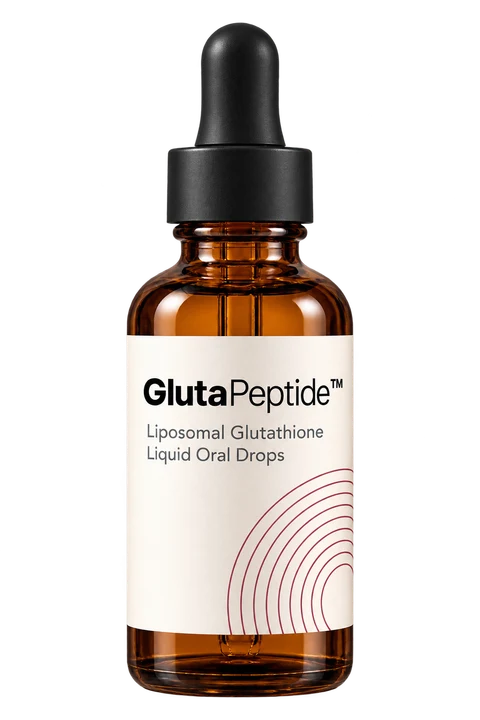
The papers linked here investigate glutathione supplementation. Their study doses are not GlutaPeptide serving instructions. Use the final bottle label for product directions.
Use the evidence to ask better questions.
For a product comparison, look for a clearly described formulation and a study that measures the claim being made. Absorption claims should identify the delivery system and concentration measure; a claim about a particular benefit should identify that benefit as a measured outcome.
For an introduction to the ingredient, read the glutathione guide. For the differences between a liquid format, a liposomal carrier and the route of taking it, continue to the delivery guide.
Your questions, answered.
Why do glutathione studies reach different conclusions?
They can differ in formulation, duration, participants, dose, comparison groups and the endpoints measured. Compare these details before comparing headline findings.
Is a laboratory marker the same as a clinical benefit?
No. A marker is a measurement used in a study. Demonstrating an everyday or clinical benefit requires measuring that particular outcome.
Are these studies tests of GlutaPeptide?
These linked papers evaluate the formulations described by their authors. They are ingredient and delivery research, not product trials of GlutaPeptide.